Another great RocketTheme Joomla Template brought to you by the RocketTheme Joomla Template Club.
Get the Flash Player to see this player.

Address

1300 Oak Grove Road
Pine Mountain, GA 31822
Phone 706-663-8744
Toll-Free 800-367-2751
Animals

Animals


AMERICAN ALLIGATOR
(Alligator mississippiensis)
Found throughout the Southeast, from the Carolina’s to Texas and north to Arkansas. Alligators live in wetlands and eat just about anything, from fish, turtles and snails to small animals. Alligators have a large slightly rounded body with thick limbs, a broad head and a very powerful tail, which is used to propel the alligator through the water. The tail accounts for half of the alligator’s length.
Image 
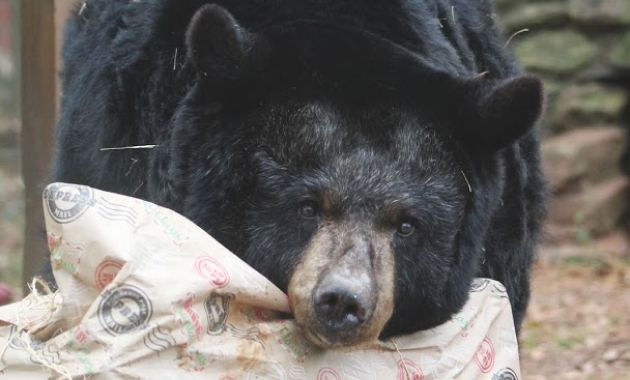
AMERICAN BLACK BEAR
(Ursus americanus)
Found in Alaska, Canada, United States and Northern Mexico. Bears are omnivorous (except for Polar Bears). and depend mostly on their excellent sense of smell. A bear’s eye sight and hearing are not particularly good. Most bears live a solitary life except when looking for a mate or a female with her young.
Image
AMERICAN BUFFALO
(Bison bison)
Found in Yellowstone National Park, National Bison Range in the Flathead Valley of Montana, the Wichita Mountain National Wildlife Range in Southwest Oklahoma, the Fort Niobrara National Wildlife Refuge in Northern Nebraska, Sully’s Hill National Wildlife Refuge in Northwestern North Dakota and Walnut Creek National Wildlife Refuge in Central Iowa. There are also many other privately owned herds throughout North America. Buffalo are large cloven-hoofed animals with hollow, curved horns. Their color varies from light to dark brown depending on where they live. Buffalo have a huge head and a great hump covered with dark brown woolly hair. Buffalo eat grasses.
Image
BLACKBUCK ANTELOPE
(Antelope cervicapra, L.)
Found in the open woodlands and semi-desert areas of the Indian subcontinent and some parts of the southern half of the United States. Blackbuck are light brown in color with white highlights around the eyes, on the ears, chin, underparts and rump. As the males mature the upperpart becomes a rich dark brown color. Grown males have ringed horns spiraling in a V at least 13 inches above the head. Blackbucks eat mainly grasses but will browse on pods, flowers and fruits.
Image
BLACK MANE LION
(Panthera leo)
Found in all parts of Africa south of the Sahara and in the Gir Forest of India. Black mane lions are very large cats with a well-proportioned and balanced body and a large hear. Its coat varies from tawny to brownish-yellow with a black-tipped tail and black patches on its ears. Male lions have a heavy body-color, brown or black mane. Lions are the only wild cats that live in a group or pride consisting of one mature male and any number of females, cubs and immature males. The females do most of the hunting. Lions are meat eaters who have also been know to scavenge.
Image
CAMEL
(Camelidae)
Found in Northwestern China, Mongolia and the Middle East. There are 2 varieties - Dromedary and Bactrian. Camels are able to withstand extreme temperatures, hot or cold. Camel’s have the ability to close their nostrils to keep out blowing sand. Camel’s can go for long periods without water, which makes them great dessert travelers. To distinguish a Dromedary from a Bactrian look at the number of humps a camel has on their back. A Dromedary has one hump and a Bactrian has two humps.
Image 
LIGER
A liger is a cross between a male lion and a female tiger. It is the largest of the cat family. It may weigh up to 1,000 pounds and be up to 12 feet when standing on its hind legs.
Image 
CAPUCHIN
(Cebus capucinus)
Found in Honduras, Western Columbia and Ecuador. Capuchin’s have a slightly prehensile tail. They need a wide variety of foods in their diet. Capuchin’s are so active and intelligent they have become the most numerous monkey in captivity and may live over 40 years. Their active and mischievous nature makes them a first class entertainer.
Image 
COATI/COATIMUNDI
(Nasua narica)
Found in the Sonoran and Chihuahuan deserts of southwestern Arizona, southwestern New Mexico and the Big Bend to Brownsville areas of Texas. Coati are racoon-like carnivores who are slender and have a longer snout. A Coatimundi’s fur is reddish brown to black on top and yellowish to dark brown underneath. The muzzle, chin and throat are usually white and the feet black. There are black and grey markings on the face and the tail is banded. They live mainly in canyons of desert mountain forests, usually near water. They travel in groups of 6 to 24, are very noisy chattering with each other and carry their tails straight up. They eat insects, lizards, roots, fruits, nuts and eggs.
Image 
ELK
(Cervus elaphus)
Found worldwide. Elk are the second largest member of the deer family. The upper part of an Elks body is some shade of brown with the underpart being paler. Elk have large antlers on their heads. They live in areas from open grasslands to dense jungle. In some areas Elk will move into higher country during the Spring and return to the lowlands in the Fall. Elk are most active in the early morning and late afternoon. Elk feed largely on grasses and herbs but also browse on foliage from trees.
Image 
GIRAFFE
(Giraffidae)
Found in the African Plains. Giraffes are the tallest of all land animals. They are active both day and night, spending 15 to 20 hours a day feeding. Giraffes usually sleep or nap standing up but occasionally lay down. Giraffes have a very acute sense of sight, hearing and smell.
Image 
GREVY’S ZEBRA
(Equus grevyi)
Found in the semi-desert areas of Eastern Africa, primarily Ethiopia, Somalia and Kenya.Zebra’s have black stripes o a whitish or tawny coat all over their body including the mane and ears. The stripes are used for camouflage to hide from predators. When the zebra movesthe stripes confuse a pursuing predator. Grevy’s Zebra are different from other zebra’s becauseof their ears and bellies. Their ears are bulbous and have fur inside and there is no stripes on their belly. Zebra’s eat grasses.
Image 
KANGAROO
(Macropodidae or Potoridae)
Found in Australia and New Guinea. Kangaroo’s come in all sizes but have one thing in common - they all powerful hind legs with long feet. Kangaroos hop on their hind legs to move fast.To move slow, they balance on their front paws and tail then swing their hind legs forward.Female kangaroo carry their babies in a pouch on the front of their stomachs. Kangaroo eatmostly grasses and shrubs.
Image 
RHINOCEROS
(Diceros bicornis)
Found in Africa and Asia. The word rhinoceros means “horn-nosed” and rhinos use their horns for several purposes. The horns are used to shovel the ground for mineral salt; to fight overterritory or a female, or during courtship; and to defend themselves and their young from lions,tigers and hyenas. Rhinos have poor eyesight but make up for it with extremely acute senses ofhearing and smell. They eat only plants.
Image 
SIBERIAN TIGER
(Panthera tigris)
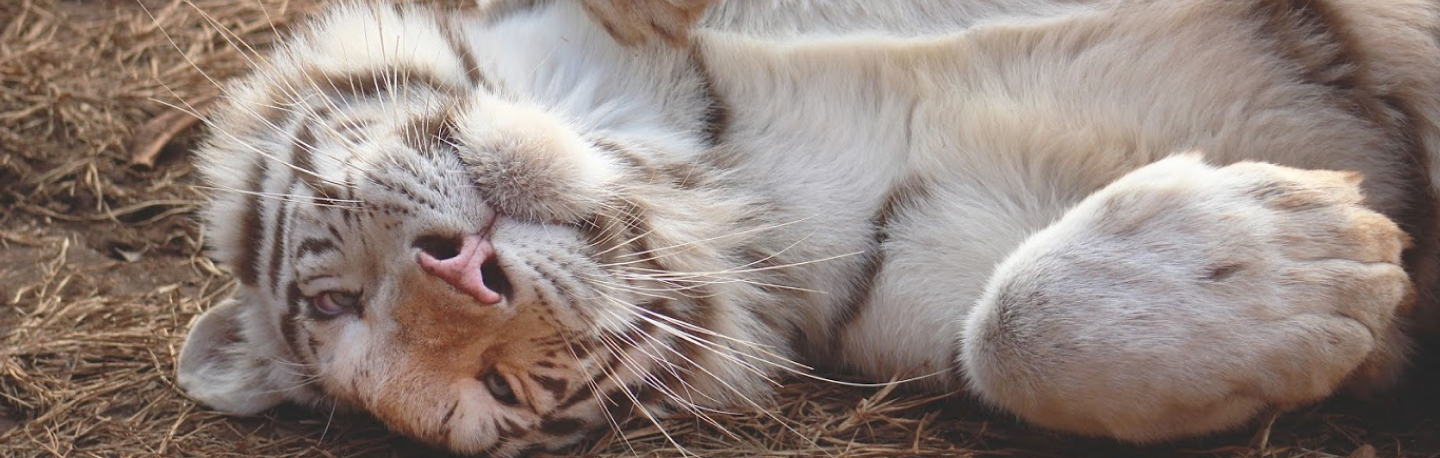
Found in Southeastern Siberia. Siberian Tigers are the largest of all the big cats. SiberianTigers hunt mostly at night and depends on its sight and hearing to find prey. They can leap upto 10 meters horizontally and are capable of climbing trees but usually stay out of trees. Siberian Tigers can swim quite well and seem to like the water.
Image 
REFERENCES
Oklahoma State University
U.S. Fish and Wildlife Service
Australia Government-Biodiversity Group
San Antonio Zoo


The Belgian Draft Horse Corp. of America
Sea World/Bush Gardens
Oakland Zoo
Britannica Encyclopedia